
Schedule Wichita, KS UTV and ATV Service
For some people, a UTV is something they load onto a trailer for a weekend of riding.
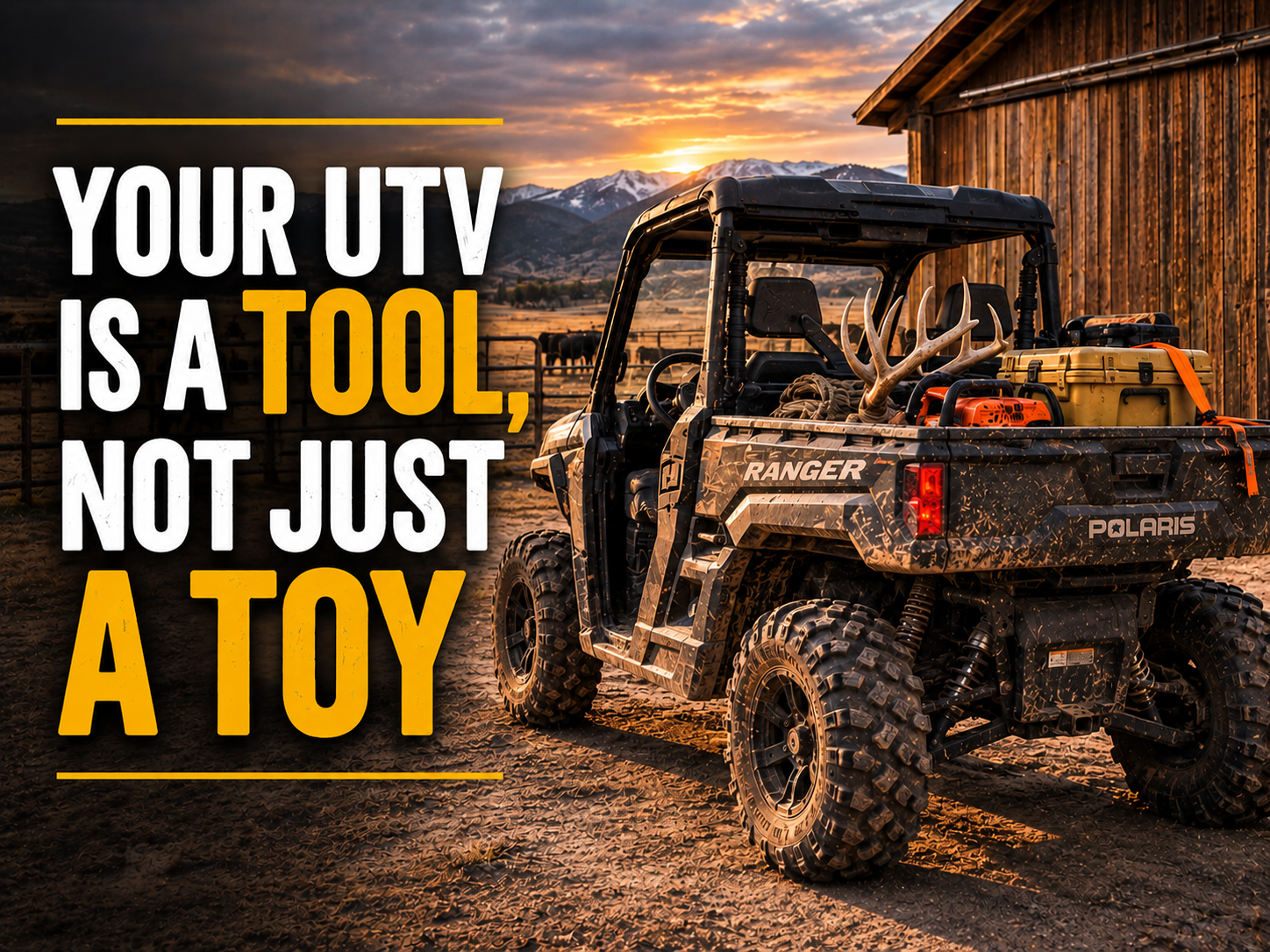
For others, it’s the machine they climb into when there’s work to be done.
Maybe you’re checking fences, hauling tools, moving supplies, maintaining trails, or traveling across property that’s difficult to access with a truck.
You might use it to transport hunting equipment, check on livestock, or simply make everyday tasks around your acreage more manageable.
And sometimes, it’s the same machine you take out for fun when the work is finished.
There’s nothing wrong with either kind of ownership.
But when your UTV becomes part of how you get things done, something changes.
Its value isn’t measured only by how enjoyable it is to drive. It’s also measured by how consistently it’s available when you need it.
That distinction should influence how you think about maintenance, repairs, and the equipment you choose.
When a Recreational Vehicle Becomes Working Equipment
UTVs and side-by-sides are often marketed around adventure, horsepower, suspension travel, and recreational performance.
Those features certainly appeal to many owners.
But for someone maintaining a rural property, a UTV may be valuable for entirely different reasons.
It can transport tools and supplies to areas where taking a full-size truck would be inconvenient. It may help with fence maintenance, property inspections, hauling materials within its rated capacity, or reaching areas that would otherwise require considerable walking.
You don’t need to operate a commercial farm or large ranch for those benefits to matter.
Someone maintaining a few acres may find their UTV just as useful for their particular responsibilities.
And the machine doesn’t need to be used every day to become important.
What matters is the role it plays in your life.
Once you begin depending on it to accomplish practical tasks, reliability becomes one of its most valuable features.
Dependability Changes What Matters
Think about the difference between a machine that’s used occasionally for recreation and one that’s part of your regular work.
If a recreational UTV develops a mechanical problem, it might interrupt a planned ride or family outing.
That’s frustrating, especially when free time is limited.
But if your UTV is also how you move equipment around your property or reach areas where work needs to be completed, a mechanical problem can create a different kind of inconvenience.
Now you may have to find another way to accomplish the task.
Neither situation is automatically more important.
The consequences are simply different.
That’s why owners who depend on their machines for practical work may place greater emphasis on predictable starting, dependable drivetrain operation, properly functioning brakes, suitable tires, and equipment that supports their actual responsibilities.
A machine doesn’t need to be the fastest or most powerful to be the most useful.
It needs to be appropriate for the work you’re asking it to perform.
Downtime Costs More Than the Repair
When a UTV breaks down, the repair bill is usually the most obvious expense.
But it isn’t always the only cost.
Consider a hypothetical situation where you use your side-by-side to maintain several acres of property.
You have tools and materials to move, areas to inspect, and work you’ve planned around your available time.
If the machine becomes unavailable, you may need to postpone those tasks, use less convenient equipment, or spend additional time accomplishing the same work.
For someone using a UTV professionally, those disruptions can have measurable financial consequences. Additional labor, reduced productivity, delayed work, and missed opportunities all have costs, even when they don’t appear on the repair invoice.
A machine that allows one person to complete a task efficiently may be difficult or expensive to replace temporarily with other equipment or methods.
Even for owners who aren’t using their machines commercially, lost time and disrupted plans still have value.
This changes how you might evaluate maintenance and repair decisions.
The question isn’t only, “What will this repair cost?”
It’s also, “What happens if I don’t have this machine available when I need it?”
For some owners, a short period of downtime is relatively easy to accommodate.
For others, even a few days without the machine may create meaningful expenses, lost productivity, or missed opportunities.
Understanding that difference can help you make more sensible decisions about when to address mechanical concerns.
The Work You Do Matters as Much as the Hours
Two UTVs can have similar mileage or operating hours and still experience very different working conditions.
One might spend most of its time traveling recreational trails.
Another might make frequent short trips around a property, operate in dusty conditions, carry tools and supplies, or spend considerable time moving slowly over uneven terrain.
Neither machine is necessarily being used incorrectly.
They’re simply doing different jobs.
And those differences can influence maintenance needs.
Dusty environments can place additional demands on air filtration. Mud and water exposure may require attention to affected components. Repeated starting and stopping, hauling, towing within manufacturer limits, and extended operation can also influence wear and maintenance considerations.
This doesn’t mean every working UTV requires unusually frequent service.
It means mileage and hours are only part of the picture.
The manufacturer’s maintenance recommendations matter, but so do the machine’s actual condition and the environment in which it operates.
When you’re using a UTV as working equipment, understanding those conditions helps you make better maintenance decisions.
The Best Equipment Isn’t Always the Most Impressive
It’s easy to get caught up in the recreational side of the powersports industry.
More horsepower.
Bigger tires.
Expensive accessories.
Specialized modifications.
Those things can be valuable for owners who have a genuine use for them.
But if your UTV is primarily a working machine, the most useful improvements may be much less exciting.
Appropriate tires for the surfaces you travel.
Reliable lighting when you work early or late.
Useful storage for tools and equipment.
Cargo and towing arrangements that stay within the manufacturer’s limits.
Properly maintained steering, suspension, and braking systems.
Depending on the machine and how you use it, some of these considerations may matter far more than additional performance.
And sometimes the best decision isn’t adding anything.
It’s keeping the equipment you already have in good working condition.
The goal isn’t to build the most impressive machine.
It’s to have a machine that reliably supports the work you actually do.
Maintenance Should Match the Machine’s Role
Once you understand how much you depend on your UTV, maintenance becomes easier to think about in practical terms.
You aren’t simply following a schedule because the owner’s manual says it’s time.
You’re caring for equipment that serves a purpose.
Manufacturer maintenance recommendations remain an important starting point. But the machine’s working conditions, actual use, and any changes in its operation also deserve attention.
If your UTV begins making an unfamiliar noise, develops a starting concern, or starts behaving differently under load, understanding the cause can help you decide what needs attention.
Not every symptom indicates a serious problem.
And not every maintenance item requires professional service.
Many capable owners handle appropriate maintenance themselves.
But when a concern involves unfamiliar systems, uncertain diagnosis, or work beyond your equipment or experience, professional evaluation can help you understand your options.
That may include identifying what needs to be repaired, what should be monitored, and what can reasonably wait.
The goal isn’t to replace components unnecessarily or spend money simply because the machine is used for work.
It’s to make maintenance decisions that reflect how important the machine is to your everyday responsibilities.
Plan Around When You Need the Machine
One practical advantage of understanding your UTV’s role is being able to plan maintenance around your actual schedule.
If you use your machine heavily during certain seasons, you may have opportunities to address routine maintenance or known concerns during periods when it’s less urgently needed.
If you depend on it year-round, those opportunities may be smaller.
In that case, paying attention to developing concerns and planning appropriate service becomes particularly useful.
For example, a property owner who knows they’ll need their UTV regularly during hunting season may want to address an existing starting problem beforehand.
Someone preparing for a period of heavier property maintenance may want to review overdue service before that work begins.
The point isn’t that every owner needs to schedule service before every busy period.
It’s that understanding when you depend on the machine gives you more control over maintenance decisions.
And greater control is valuable when equipment is part of how you get things done.
One Machine Can Have More Than One Purpose
Of course, many UTV owners don’t divide their machines neatly into work and recreation.
You might spend Saturday morning hauling tools and maintaining your property, then take the same machine out for an afternoon ride.
You might use it for hunting, checking fences, moving supplies, and spending time outdoors with family.
That’s part of what makes these machines so versatile.
But it also means your ownership decisions should consider the full range of demands you place on the machine.
A setup that’s ideal for one activity may involve compromises for another.
The same is true of maintenance priorities.
Thinking about everything you use your UTV for can help you make more informed decisions about equipment, service, and reliability.
You don’t have to choose between treating your UTV as a recreational vehicle or a working tool.
It can be both.
Reliability Is Part of the Machine’s Value
When your UTV becomes part of how you get things done, its value goes beyond the purchase price, performance specifications, or how much fun it is to drive.
It’s the ability to move supplies when you need them.
Reach areas of your property.
Complete necessary work.
And have the machine available when your plans depend on it.
That doesn’t mean every working UTV needs extensive maintenance or expensive upgrades.
It means the role your machine plays should influence how you care for it.
At Big Dog Powersports in Wichita, Kansas, we provide professional UTV and ATV maintenance, diagnostics, and repair for owners who want to keep their machines operating dependably.
If your machine has developed a mechanical concern, is due for maintenance, or needs professional attention, we invite you to schedule service with Big Dog Powersports.
Because whether your UTV spends its time working, exploring, or doing a little of both, one of its most valuable features is being ready for the job you need it to do.
Wichita UTV and ATV Service Resources
Learn more about UTV and ATV maintenance, diagnostics, and repair services in Wichita, Kansas at Big Dog Powersports.
For more information about the Wichita area, visit Wichita, Kansas visitor and recreation resources.
UTV Service and Repair Video
Watch our Big Dog Powersports Wichita UTV and side-by-side service video.
Visit Big Dog Powersports in Wichita, KS
Find us at Big Dog Powersports Wichita, KS.
4208 W Bounous St, Wichita, KS 67209