
Schedule Wichita, KS SxS and UTV Maintenance Before Your Little Sahara Trip
(316) 260-8039 Call Big Dog Powersports
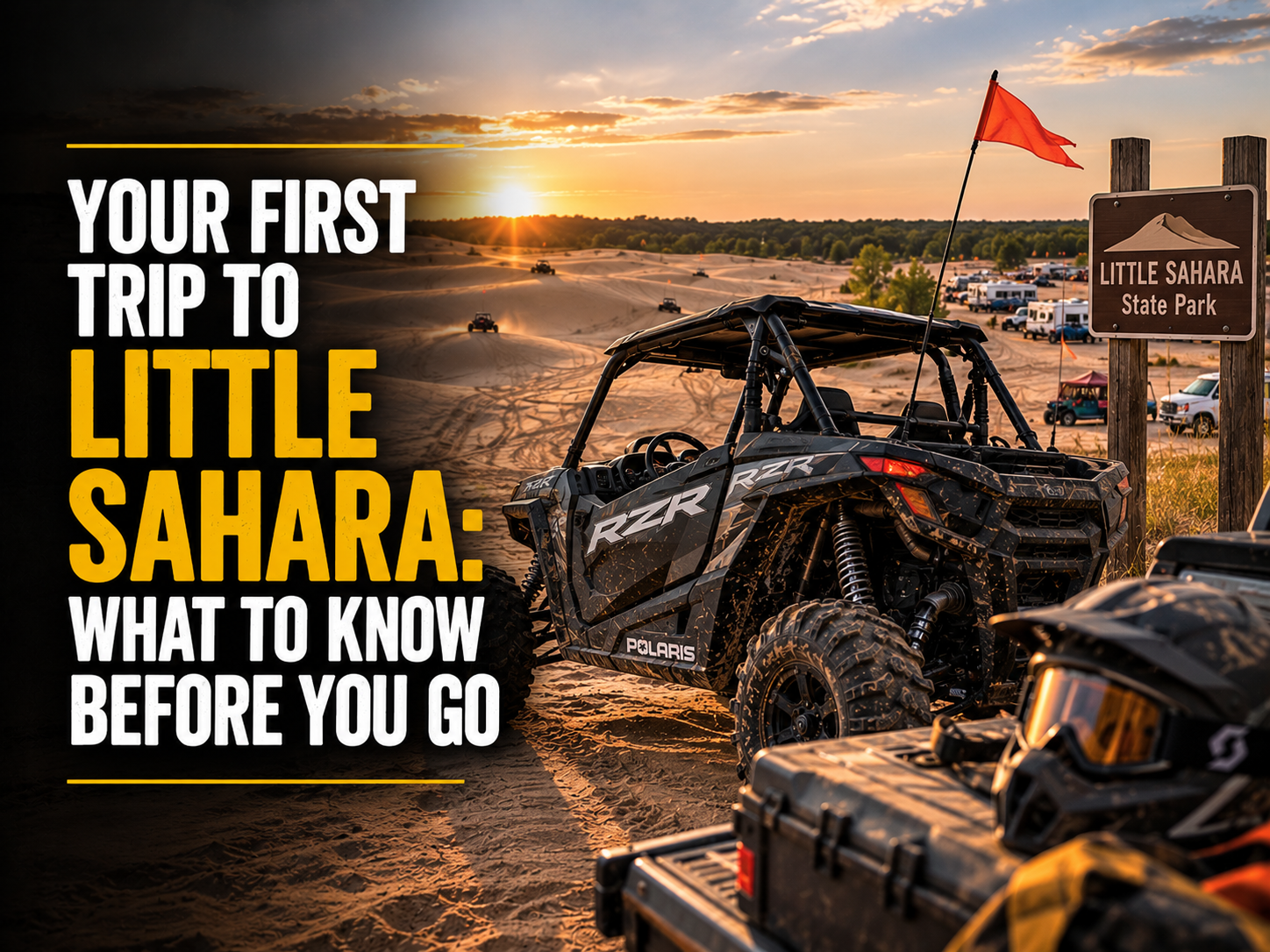
Your first trip to Little Sahara doesn’t have to involve a high-performance UTV, expensive modifications, or tackling the biggest dunes in the park.
If you’re accustomed to riding dirt trails, exploring rural property, or using your ATV or side-by-side for work, riding on sand can introduce an entirely different kind of adventure.
But sand is different from the terrain most owners encounter regularly.
Traction changes. Hills can be steeper than they appear. The surface shifts beneath your tires, and you can’t always see what’s waiting on the other side of a dune.
That doesn’t mean Little Sahara is only for experienced riders.
It means a little preparation and an understanding of the environment can make your first visit much more enjoyable.
What Makes Little Sahara Different?
Located near Waynoka in northwestern Oklahoma, Little Sahara State Park offers a recreational off-road environment unlike the dirt trails, gravel roads, and wooded areas many Kansas and Oklahoma riders are familiar with.
Sand behaves differently from firm ground.
Your tires may sink into the surface rather than roll across it. Acceleration, steering, and braking can feel unfamiliar, and the terrain itself can change with wind and weather.
The dunes also create visibility challenges.
A hill that looks relatively simple from one direction may have a much steeper descent on the other side. Other riders can temporarily disappear behind the terrain and reappear somewhere you weren’t expecting.
That’s why the best approach for a first visit is to spend time getting familiar with the environment before considering more challenging areas.
You don’t have to prove anything to enjoy riding there.
Start With a Machine You Can Depend On
Before worrying about special tires or accessories, think about the condition of the UTV or ATV you already own.
Sand riding can place different demands on a machine than ordinary trail riding, particularly when it comes to traction, engine load, cooling, and airborne dust.
If your machine already has a questionable drive belt, cooling concern, starting problem, or another issue you’ve been postponing, it’s worth understanding that problem before making the trip.
Pay attention to the condition of your tires, brakes, air filtration system, and routine maintenance.
The goal isn’t to make your machine perfect.
It’s to avoid arriving at a destination with a known problem that could interfere with your plans.
A well-maintained recreational machine that’s appropriate for the terrain may be a much better starting point than a heavily modified machine with unresolved mechanical concerns.
For riders preparing to travel from south-central Kansas, Big Dog Powersports provides Wichita UTV and side-by-side service, maintenance, and repair for owners who want to address known mechanical concerns before a trip.
Tire Pressure Can Make a Big Difference in Sand
One of the most useful things to understand before your first dune trip is how tire pressure affects performance on loose sand.
On firmer surfaces, tires can often roll without sinking very far into the ground.
Sand is different.
A tire may dig into the surface, making it harder for the vehicle to maintain momentum and move efficiently.
Tire pressure affects the shape of the tire’s contact patch—the area touching the ground.
Under appropriate conditions, reducing pressure can allow a tire to spread its contact area and improve flotation on soft sand. That’s one reason experienced sand riders sometimes use lower pressures than they would on firmer terrain.
But there’s an important trade-off.
Reducing pressure too far can compromise handling, damage a tire, or allow the tire bead to separate from the wheel.
And the right pressure isn’t universal.
It depends on your machine, tire construction, wheel configuration, vehicle weight, speed, and riding conditions.
That’s why recommending one pressure for every UTV or ATV would be misleading.
Before making adjustments, understand the requirements and limitations of your particular tires and wheels, and consult the applicable manufacturer guidance.
Also think about what happens when you’re finished riding. If you’ve reduced tire pressure for sand, you may need to reinflate before returning to firmer surfaces or traveling at different speeds.
The important lesson isn’t that lower pressure is always better.
It’s that tire pressure is part of how your machine interacts with the terrain, and changing it should be an informed decision.
Do You Need Paddle Tires?
If you’ve watched videos of sand dune riding, you’ve probably noticed machines equipped with specialized paddle tires.
These tires are designed to generate propulsion in loose sand, using raised paddles to push against the surface.
They’re popular among dedicated dune riders for good reason.
But that doesn’t mean everyone visiting Little Sahara needs them.
Many recreational UTVs and ATVs use conventional all-terrain tires designed to work across a variety of surfaces. Depending on the machine, tires, conditions, and terrain selected, those tires may be suitable for recreational sand riding.
Paddle tires offer advantages in their intended environment, but they also introduce trade-offs involving handling, drivetrain demands, expense, and suitability for other surfaces.
Different machines may also use different front and rear tire arrangements.
For a first visit, the better question isn’t whether you have the same equipment as the most experienced riders.
It’s whether your existing tire setup is appropriate for the kind of riding you intend to do.
And remember, no tire choice makes every dune safe or suitable for every machine.
Getting Stuck Isn’t Always About Traction
Getting stuck is a realistic possibility when riding in sand.
Sometimes the tires dig into the surface and the machine loses the ability to move forward.
Tire choice, pressure, terrain, and vehicle weight can all influence that situation.
But there’s another possibility that’s particularly relevant to UTVs and side-by-sides.
A vehicle can become high-centered on a dune crest.
This happens when the sand beneath the chassis or undercarriage supports enough of the vehicle’s weight that the tires lose the contact or traction needed to keep moving.
In that situation, the tires may not be the underlying problem at all.
The shape of the dune, vehicle wheelbase, ground clearance, and the way the machine approaches the terrain can all contribute.
This is one reason unfamiliar dune crests deserve caution.
Getting high-centered can leave you stuck in an inconvenient location. But there’s another, potentially much more serious danger: the far side of the crest may have a steep drop-off you cannot see from your approach.
Never assume that the terrain continues safely beyond a dune simply because you can see the slope leading up to it.
Take time to assess unfamiliar terrain rather than committing to a crossing without knowing what’s beyond it.
Respect the Dunes and Other Riders
Sand dune riding can be exciting, but it also carries real risks. Collisions, rollovers, and unexpected drop-offs can cause serious injuries or fatalities.
Unlike a conventional trail, where the path ahead may be relatively easy to follow, dunes can hide both terrain and other vehicles.
A rider may appear suddenly from behind a hill. A familiar-looking slope may end in an abrupt transition. A machine can overturn when terrain, speed, and handling demands exceed what the rider or vehicle can manage.
For first-time visitors, patience is an advantage.
Begin with terrain you can comfortably understand and navigate. Learn how your machine responds to sand, and don’t feel obligated to follow experienced riders into areas beyond your abilities.
Protective equipment is equally important. Wear an appropriate helmet, eye protection, and suitable riding clothing. In a UTV, use the manufacturer-specified seat belts or occupant restraints, and keep your hands, arms, and legs inside the vehicle.
Protective equipment reduces certain risks, but it cannot eliminate the possibility of injury.
Visibility matters too. Little Sahara requires an orange safety flag mounted on a whip, and the park has specific rules for vehicle lighting, helmets, and occupant protection. Check the official requirements before arriving rather than assuming your usual trail equipment is sufficient.
Review the requirements through Oklahoma’s Official Travel & Tourism Site.
Can You Visit With Just One UTV or ATV?
Absolutely. You don’t need a group of friends with matching machines to plan a visit to Little Sahara.
Many recreational owners have only one UTV or ATV, and traveling independently shouldn’t automatically prevent them from exploring a new riding destination.
However, there’s an important distinction between arriving with one machine and taking unnecessary risks while riding alone.
Riding with other people can provide additional assistance if something goes wrong, but it’s not a requirement for enjoying the park.
What matters is having a realistic plan.
Tell someone where you’re going and when you expect to return. Have a reliable way to communicate, while recognizing that cellular service may not be dependable everywhere. Know how to identify your location and seek assistance if necessary.
Think about how you’d handle a disabled or stuck machine before you’re facing that situation.
And pay particular attention to changing conditions.
If strong winds begin blowing sand across the dunes, visibility deteriorates, or very few other riders are present, getting stuck or experiencing a mechanical problem can become considerably more serious.
Sometimes the sensible choice is to remain closer to accessible areas, change your plans, or wait for better conditions.
Being independent doesn’t mean taking every risk alone.
Check the Park Rules Before You Leave
A few practical details are worth confirming before your trip.
According to Oklahoma’s official tourism website, Little Sahara State Park is located at 8951 US Highway 281 near Waynoka, Oklahoma. The riding area is open 24 hours a day, although the park office operates on a separate schedule.
The official park information currently lists a $15 daily riding fee per driver or passenger, with children under 10 admitted free. It also specifies:
- A whip extending 10 feet above the ground, with a solid bright-orange flag measuring 6 by 12 inches near its tip.
- Vehicle-powered white front and red rear lighting for nighttime riding.
- Helmet requirements for riders under 18 who are not inside a vehicle with a structured roll cage.
- Seat belt and roll-bar requirements for applicable dune buggies and 4×4 vehicles.
- No carrying passengers on ATVs unless the vehicle was specifically manufactured for that purpose.
Full-coverage helmets are strongly recommended by the park. Pedestrians are not permitted in the dune riding area; an observation deck is available for spectators.
Rules and fees can change, so review the official Little Sahara State Park information and riding regulations before departure. You can also contact the park office at 580-824-1471.
Make Your First Visit Your Own
One of the best things about visiting somewhere like Little Sahara is that you don’t have to experience it the same way as everyone else.
Some riders enjoy steep climbs, specialized machines, and challenging terrain.
Others simply want to explore somewhere new, learn how their machine handles sand, spend time outdoors, or enjoy a day with family.
Both are legitimate ways to enjoy the destination.
You might spend your first visit getting comfortable with relatively approachable terrain, watching other riders from designated viewing areas, and learning what equipment or preparation would make a future trip better.
That’s a successful visit.
You don’t need to conquer the biggest dune, jump your machine, or return home with an impressive story.
The experience itself is enough.
Final Thoughts
Little Sahara offers a different kind of off-road adventure, especially for owners accustomed to conventional trails and rural property.
You don’t need the most powerful machine or an expensive collection of modifications to appreciate it.
But you do need to understand that sand changes how your machine behaves, that tire pressure and tire selection involve trade-offs, and that unfamiliar dunes deserve respect.
Prepare your machine, understand the park’s requirements, think through what you’ll do if you get stuck, and recognize when terrain or weather conditions are beyond your comfort level.
Most importantly, give yourself permission to learn gradually.
A great first trip isn’t measured by how fast you ride or how difficult the terrain becomes.
It’s measured by having an enjoyable experience, learning something useful, and returning home ready to do it again.
Big Dog Powersports: Wichita SxS and UTV Service
For Kansas riders preparing for Little Sahara or returning from a weekend in the sand, Big Dog Powersports offers practical service support for recreational and working side-by-sides. Our Wichita shop focuses on maintenance, diagnostics, repair, and performance upgrades for major UTV brands.
Whether you’re planning your first dune trip or simply keeping your machine ready for Kansas riding conditions, you can learn more about our Wichita side-by-side service and repair options.
Big Dog Powersports Video
For another look at Big Dog Powersports and our approach to powersports service, watch the video below.
Watch the Big Dog Powersports Wichita Kansas SxS and UTV service video on YouTube.
For more information about the city and surrounding area, explore Wichita, Kansas visitor and travel resources.
Visit Big Dog Powersports in Wichita, Kansas
Find us at Big Dog Powersports Wichita, KS.
4208 W Bounous St, Wichita, KS 67209